Carmen Hernández
 15/12/2025
 6 min

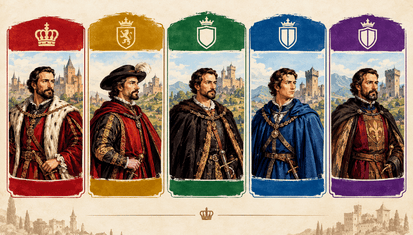
The Main Figures of the Expedition
Ferdinand Magellan was born in Portugal around 1480. He was an experienced navigator who decided to offer his services to the Spanish Crown to organise an expedition to the Spice Islands by sailing westwards.
Magellan led the first part of the voyage and managed to find a sea passage between the Atlantic and Pacific Oceans. However, he was unable to complete the journey around the world because he died in April 1521 during a battle on the island of Mactan, in the Philippines.
Juan Sebastián Elcano was born in Getaria, in the Basque Country, around 1486. After Magellan’s death, he played a key role in the expedition and eventually took command of the ship Victoria during its return voyage to Spain.
Elcano succeeded in completing the first circumnavigation of the Earth, becoming a key figure in the history of navigation. His return to Spain in September 1522 proved that it was possible to connect different parts of the world by sea.
Another important figure was Antonio Pigafetta, an Italian navigator who took part in the expedition and kept a detailed diary of the voyage. Thanks to his notes, we know about many of the events that took place during the journey, the customs of the peoples they encountered and the difficulties the sailors had to overcome.
Enrique of Malacca also deserves special mention. He was an interpreter of Malay origin who accompanied Magellan. His knowledge of different languages was important for communicating with some Asian populations. His story is connected to one of the most interesting aspects of the voyage: contact between very different cultures.
A Journey Full of Dangers and Discoveries
Magellan and Elcano’s expedition was extremely difficult. For almost three years, the sailors had to endure storms, diseases, hunger and a lack of drinking water. In addition, living conditions on board the ships were very harsh: there was little space, food was limited and maintaining hygiene was extremely difficult.
One of the most important moments of the voyage was the discovery of the sea passage located at the southern tip of South America. This place was later named the Strait of Magellan and made it possible to connect the Atlantic Ocean with the Pacific Ocean.
After crossing it, the expedition reached an ocean that Magellan named the Pacific Ocean. This name was chosen because, during part of their journey across it, its waters seemed calm compared with the difficulties they had previously encountered.
However, crossing the Pacific was an extremely difficult experience. The sailors spent months at sea without finding enough food or fresh water. Many became ill and some died during the crossing.
Finally, they reached the Philippines, where Magellan lost his life. Despite this tragedy, the survivors continued their journey and managed to reach the Spice Islands.
The Consequences of the First Voyage Around the World
The first voyage around the world by sea had very important consequences for history, geography, trade and science.
First of all, the expedition provided practical proof that the Earth could be circumnavigated by sea in a single direction, connecting oceans and different continents. It also provided new knowledge about the size of the planet and the distances between Europe, America and Asia.
From a commercial point of view, the voyage opened up new opportunities for establishing sea routes between different regions of the world. Spices and other products could be transported between continents, encouraging economic and cultural exchange.
In the scientific field, maps and geographical knowledge improved thanks to the observations made during the expedition. Navigators were able to record new coastlines, islands and sea routes, providing extremely valuable information for future explorations.
However, it is also important to remember that these voyages were connected to the expansion of European empires, the conquest of territories and the transformation of Indigenous societies. For this reason, the history of the expedition should be understood from different perspectives.
Interesting Facts About Magellan and Elcano’s Voyage
The story of the first voyage around the world is full of surprising facts:
- Five ships began the journey, but only the ship Victoria managed to return to Spain after completing the circumnavigation.
- Juan Sebastián Elcano was the one who completed the expedition and arrived in Spain in September 1522.
- Antonio Pigafetta wrote one of the most important accounts for understanding the details of the voyage.
- The sailors discovered new routes and came into contact with peoples and cultures that were unknown to many Europeans.
- When the expedition returned to Spain, the sailors discovered a one-day difference in their calendar, a phenomenon related to sailing around the Earth and the International Date Line.
Why Is It Important to Remember This Achievement?
The first voyage around the world by sea was not simply a maritime adventure. It was an event that changed the way people understood the planet and its possibilities for communication. It demonstrated the importance of exploration, perseverance and knowledge. It also showed how contact between different cultures could transform the history of peoples.
Today, more than 500 years later, this voyage remains a symbol of curiosity, courage and the ability to overcome known limits.
The adventure of Magellan and Elcano reminds us that discovering the world is also a way of learning about ourselves.