Carmen Hernández
 17/12/2025
 7 min

The Origins of Rock in Spanish
Rock in Spanish is part of the musical and cultural history of millions of people. From its first chords in the 1950s to the songs we listen to today, it has accompanied social changes, given a voice to different generations, and connected artists and audiences on both sides of the Atlantic.
Spain, Mexico and Argentina were some of the main protagonists of this movement, although other Latin American countries also contributed to its development. Each brought its own sounds, influences and ways of understanding music.
For those studying Spanish, discovering this musical world is also a way to explore Hispanic culture, recognize different accents and learn expressions that frequently appear in everyday conversations. But where did it all begin?
The Early Days: The Influence of Rock and Roll
In the late 1950s, American rock and roll began to conquer Europe and Latin America. Artists such as Elvis Presley and Bill Haley sparked the interest of many young people and musicians who wanted to experiment with a different musical style.
At first, many Spanish-speaking bands adapted songs that had already become hits in English, translating their lyrics into Spanish. However, they soon began writing their own compositions and developing a musical identity of their own.
In Mexico, Los Teen Tops stood out, achieving great popularity with songs such as La plaga, an adaptation of Good Golly, Miss Molly. Their music crossed borders and also reached Spain, where it found an enthusiastic audience.
On the other side of the Atlantic, bands such as Los Bravos, Los Brincos and Los Mustang began making a name for themselves on the Spanish music scene during the 1960s. Los Bravos even achieved major international success with Black Is Black, released in 1966 and known in many countries.
Meanwhile, Argentina was beginning to develop its own movement. In 1967, Los Gatos released La balsa, a song widely considered one of the starting points of Argentine rock. Its success showed that audiences were ready to listen to original stories sung in their own language.
Spain: A Musical Revolution in the 1980s
In Spain, the 1980s were marked by major social and cultural transformations. Following the end of Franco’s dictatorship, new forms of artistic expression emerged, with music becoming a space for freedom and creativity.
One of the best-known phenomena was La Movida Madrileña, a cultural movement that brought together musicians, artists, filmmakers and designers. Madrid became a meeting point for young people looking to break away from traditional conventions.
Many very different artists and bands emerged during this period. Héroes del Silencio, led by Enrique Bunbury, achieved enormous popularity both in Spain and abroad. Other notable acts included Loquillo, Extremoduro, La Polla Records and Los Enemigos, representing styles ranging from urban rock to punk.
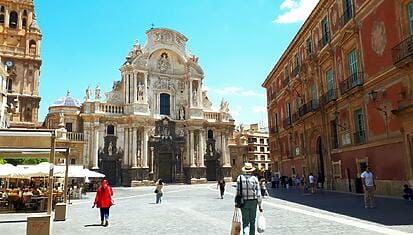
During the 1990s, the music scene continued to grow. One of the most recognized bands was M-Clan, formed in Murcia in 1993. Their sound, influenced by classic rock and blues, won over audiences with songs such as Carolina and Llamando a la Tierra. Their career is a great example of the contribution of the Region of Murcia to Spanish music.
Mexican rock has one particularly distinctive feature: its connection with the social concerns of young people.
During the 1960s, bands such as Los Teen Tops and Los Rebeldes del Rock popularized sounds originating in the United States. However, the genre soon took on a deeper meaning.
An important event was the Avándaro Festival, held in 1971. This major musical gathering brought together thousands of young people and became a symbol of Mexican counterculture. Following the festival, restrictions on live performances and the broadcasting of rock music made life difficult for many musicians for years.
The situation gradually changed during the 1980s, when bands such as Caifanes, Café Tacvba and Maldita Vecindad emerged. Their songs blended electric guitars with traditional rhythms, ska and other popular influences.
This combination gave rise to original musical styles capable of reflecting Mexico’s cultural diversity and addressing life in large cities, social inequalities and national identity.
Argentina: Songs That Made History
If there is one country that is essential to understanding the evolution of this movement, it is Argentina. Its music scene has produced some of the most influential artists in Latin America.
During the 1970s, Charly García stood out as one of its leading figures, first with bands such as Sui Generis and La Máquina de Hacer Pájaros and later with Serú Girán. His compositions combined musical creativity with deeply meaningful lyrics.
During those years, the country experienced a military dictatorship (1976–1983). In a climate of censorship and repression, certain songs became forms of expression and cultural resistance.
The following decade brought significant international expansion. Soda Stereo, formed by Gustavo Cerati, Zeta Bosio and Charly Alberti, became one of the major icons of Latin American music. Their song De música ligera, released in 1990, remains one of the most recognizable tracks in Spanish-language music.
Los Enanitos Verdes and Los Abuelos de la Nada also achieved great popularity, and their songs continue to be part of the musical memories of several generations.
Artists Who Left Their Mark
In addition to bands, several solo artists have played a fundamental role in showcasing the diversity of the music scene.
Argentinian Charly García stands out for his ability to experiment with different sounds and styles. In Spain, Loquillo became one of the leading figures of 1980s rock, while Enrique Bunbury developed a successful solo career after his time with Héroes del Silencio.
In Mexico, Alex Lora, the leader of El Tri, is known for his straightforward lyrics and his distinctive approach to social issues.
Each of these artists has helped expand the boundaries of the genre, demonstrating that rock can be about love, freedom, politics, personal experiences or simply everyday life.
From the Past to the Present: New Generations
Although its greatest icons continue to fill concert venues and evoke nostalgia, rock in Spanish has not remained stuck in the past.
In Spain, bands such as Vetusta Morla and Dorian have introduced new perspectives, incorporating elements of indie and electronic music. Meanwhile, La Raíz has combined rock, ska and urban sounds in songs with a strong socially conscious message.
This evolution shows that musical influences do not disappear; instead, they transform and blend with the trends of each era.
Learn Spanish Through Music
Would you like to improve your Spanish in an enjoyable way? Songs are an excellent resource for expanding your vocabulary, training your ear to recognize different accents and discovering colloquial expressions.
You can start by choosing a song you like. Listen to it once without reading the lyrics and try to understand its overall meaning. Then, listen to it again while following the lyrics and identify any unfamiliar words. Finally, try to explain what the song is about in your own words.
At the Instituto Hispánico de Murcia, we know that learning a language also means discovering the culture behind it. That is why music, cinema, gastronomy and traditions are all part of a much more complete learning experience.
Rock in Spanish is an invitation to discover new stories, explore different ways of speaking and enjoy a language that brings millions of people together.
May music accompany you on your Spanish-learning journey!