 Carmen Hernández
 10/06/2026
 8 min
8 min 
When we think of Spain, the first things that come to mind are sunny beaches, lively squares, delicious food, and, of course, flamenco dancers moving to the rhythm of the guitar. But what many don’t know is that all of this has a much deeper connection to the past. In reality, a large part of Spanish culture and language has Arabic roots.
That’s right! For nearly 800 years, from 711 to 1492, the Iberian Peninsula was under Muslim rule, leaving a mark that, even as time has passed, remains very present in our daily lives.
The Spanish Language: A Cocktail of Arabic Words You Use Without Knowing It
You probably use many words that come from Arabic and didn’t even know it. If you are a Spanish speaker, you are speaking Arabic without realizing it! Terms we use every day, like “almohada” (from “al-mikhaddah”), “albahaca” (from “al-habaq”), or even “alcohol” (from “al-kuḥl”), have an Arabic origin. In fact, there are more than 4,000 words in Spanish that come from this language. Did you know that even “ojalá” comes from the Arabic “in shā’ Allāh” (meaning “if God wills”)? It’s impressive how Arabic has influenced Spanish!
It is true that Arabic was the language of the Muslim kingdoms that ruled the peninsula, but it was also a language of knowledge and commerce. Through this language, philosophical, scientific, and cultural concepts were transmitted that remain fundamental to Western culture today.
Architecture and Art: If You Visit Andalusia, You’ll Feel Like You’re in a Fairy Tale
When we talk about architecture in Spain, we cannot help but think of the Muslim heritage. The Alhambra in Granada, with its imposing walls, intricate details, and majestic gardens, and the Mosque of Córdoba, with its horseshoe arches, are clear examples of how Islamic art left an indelible mark on the Peninsula. But that footprint is not just visual; it is also in the atmosphere. Muslim palaces and mosques were not only places of worship and rest, but spaces designed to harmonize with nature, as we see with the water in fountains and ponds.
By the way, the word “azulejo” comes from the Arabic “zellij,” which referred to the decorative mosaics so characteristic of the era. So every time you see tiles on a wall, remember that you are looking at a work of art that has been with us for centuries!
Science and Gastronomy: A Journey of Knowledge and Flavor
The Arabic influence in Spain is not limited to words or architecture. During the Middle Ages, Muslims brought crucial advancements in areas such as mathematics, astronomy, and medicine. It was they who introduced the numerical system we use today, and if you have ever studied algebra, the word itself comes from Arabic! Additionally, they brought us much of the knowledge that allowed Europe to advance in the field of science.
Gastronomy was not left behind either. Thanks to the Arabs, Spain began to experiment with new ingredients and spices. Rice pudding, turrón, or the famous Andalusian couscous are just a few of the delicacies we can thank this cultural melting pot for. The Arabic influence on Spanish cuisine goes far beyond rice: without them, we wouldn’t have those dishes spiced with cinnamon, saffron, and cumin that we love so much!
The Style of Speaking: Arabic and Spanish Understand Each Other Perfectly!
Did you know that Arabic and Spanish share more than just words? Both languages use tools to give emphasis to speech. In Spanish, for example, we often say “tengo un hambre que me muero” (I’m starving to death), and in Arabic, similar phrases exist to exaggerate or show how we feel. If you have ever heard someone say “I am so tired I can’t go on,” it is also common in Arabic to use that type of expression to show the intensity of emotions!
Another curiosity is that courtesy and respect are fundamental values in both cultures. For example, in Arabic, greeting formulas are always formal and loaded with respect. Similarly, in Spanish, long greetings like “¿Cómo estás?” or “¿Cómo te va?” are signs of manners and cordiality. And let’s not forget “por favor” (please) and “gracias” (thank you), which are essential in both languages!
Phrases and Sayings That Are Almost the Same
Arabic and Spanish do not only share words, but also common sayings and expressions. “He who does not work, does not eat” is said in a very similar way in Arabic, and it has the same meaning as the Spanish “El que algo quiere, algo le cuesta” (He who wants something, must pay a price for it). Furthermore, in both languages, it is common to use religious expressions to show good wishes, like “ojalá” (which comes from “in shā’ Allāh”, “if God wills”), or “bendito sea” (blessed be).
Does it surprise you? It surprises us too! It’s as if, through time, both cultures shared more than just territory: they shared a similar way of understanding life, work, and respect.
Murcia: A Little Piece of Al-Ándalus in the Heart of Spain
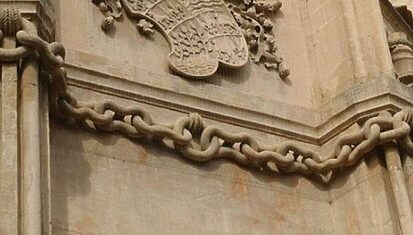
Now, did you know that in Murcia, the Arabic influence is even more visible than in other parts of Spain? If you are lucky enough to walk through the city center, you will not only see monuments like the famous Cathedral of Murcia, but you will also perceive the spirit of Al-Ándalus in the streets, squares, and old buildings. At the Conception Castle, for instance, you can observe how Islamic influences intertwine with Christian ones, leaving a visible trace of the region’s Muslim past. Furthermore, in Murcia, we also find the flavor of Arabic cuisine in its traditional dishes.
A Legacy That Relives in Every Corner
When traveling through the Region of Murcia, we encounter not only a rich and fascinating past but also a present full of life that continues to breathe the traces of the Arabs. From the words we use daily to the cobblestone streets and monuments that speak to us of past eras, everything in Murcia reminds us that the past is not as far away as we think. It is a story that remains alive, that continues to give flavor to our food, that keeps inspiring artists and thinkers, and that invites us to keep exploring and learning.
The best part of all? This Arabic legacy is a testament to how cultures intertwine, mix, and ultimately create something new and unique, with a shared heritage that crosses borders and eras.
In the architecture of its castles, in the murmur of its irrigation channels (acequias), in the festivities that fill its streets with color and tradition, and even in the way we greet others, Murcia shows us that history is not just something read in books, but something we live, touch, and feel every day. Every corner of the region, every Murcian word, is a little piece of that Arabic past that remains here—transformed, adapted, but always present.
Ultimately, the Arabic influence in Spain is not just a matter of history, but proof of how cultures intertwine, enrich each other, and grow stronger when they open themselves up to exchange. It is like a tapestry woven with threads of different colors that, as time passes, becomes a masterpiece. The history of Murcia is the history of all of us—of how the old and the modern can coexist and give us something unique and beautiful. In the end, more than just a footprint, the Arabic influence is a living legacy that continues to shape the way we speak, eat, celebrate, and live.
So, the next time you walk through Murcia, when you stop in front of a fountain or savor a traditional sweet, remember: you are touching a piece of history that never left, and no matter how much time advances, it keeps making this land a place full of magic, culture, and life. A legacy that remains alive in every corner and invites us to keep learning and sharing together!
What do you think of this Arabic influence on our culture? Leave us your opinion in the comments and share this article with your friends! 😉