
 Tereza Ruzickova
 4 min
4 min 
For a young and curious music lover like you, flamenco is an exciting journey into the cultural richness of Spain. This musical genre, full of emotion and expressiveness, has conquered hearts around the world. In this article, we will explore the secrets of flamenco, from its origins to why UNESCO considers it Intangible Cultural Heritage of Humanity.
Flamenco has its own celebration day: November 16th. This day, known as World Flamenco Day, pays tribute to this art that has transcended borders and left an indelible mark on musical history. It is an opportunity to immerse yourself in the essence of this genre, enjoy live performances and delve into its fascinating legacy.
UNESCO: recognizing cultural importance
In 2010, UNESCO declared flamenco Intangible Cultural Heritage of Humanity. Why? Because flamenco is much more than music and dance; it is an artistic expression rooted in the identity of the Roma community in Andalusia, Spain. Its recognition as intangible heritage highlights its importance as a means of transmitting traditions, values and emotions from generation to generation.
The birth of flamenco and its mysterious origins
The origin of flamenco dates back to the 18th century in the region of Andalusia, Spain, where various cultures converged to shape this passionate art. With influences from Roma, Arabic, Jewish and Spanish culture, flamenco was born as a unique artistic expression that reflected the intense emotions of life. It emerged in marginal environments and festivals, evolving through oral transmission and improvisation. Over time, the “palos” or styles, such as soleá and bulería, were structured. This rich cultural fusion and oral tradition have been fundamental in the formation of flamenco as a distinctive musical genre.
Varieties and palos: the diversity of flamenco
Flamenco is a rich and diverse musical genre, and its different styles are known as “palos”. Although the exact classification can vary depending on sources and regions, there are around fifty recognized palos. Each has its own rhythm, melodic structure and associated emotions. Here are some of the most prominent:
-
Soleá: one of the oldest and most representative palos. Slow, solemn rhythm, often expressing sadness and melancholy.
-
Bulería: fast and energetic, challenging for both singers and dancers.
-
Alegrías: lively rhythm, conveying joy and vitality.
-
Fandango: light and cheerful, often with romantic themes.
-
Taranta: serious and solemn, slow rhythm, deep emotional themes.
-
Seguiriya: intense and dramatic, slow rhythm, profound lyrics.
-
Tientos: slow and emotional, linked to love and heartbreak.
-
Rondeña: melodic and nostalgic, of moderate rhythm.
-
Guajira: Cuban-influenced, light, often about nature and daily life.
-
Martinete: primitive, solemn, slow rhythm.
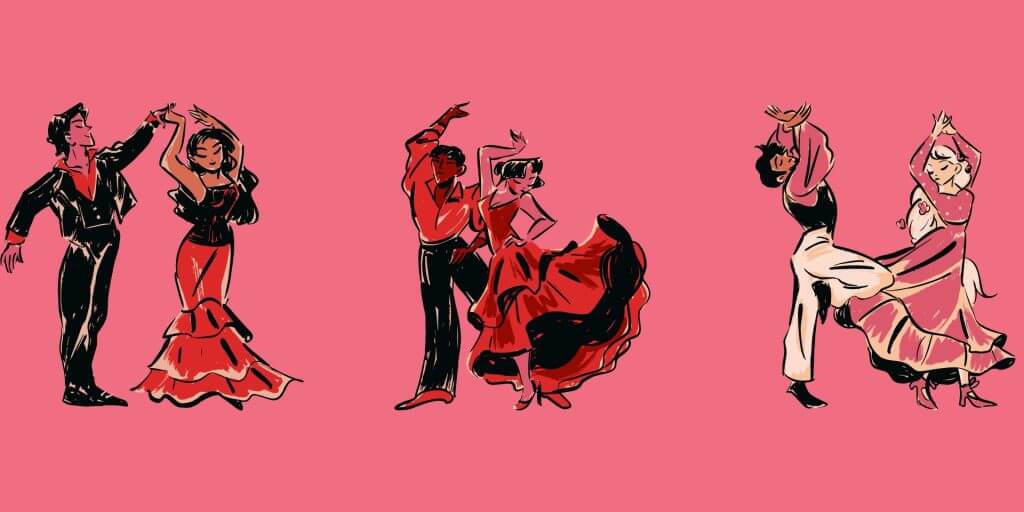
Outstanding flamenco singers of the 20th century
The 20th century saw extraordinary cantaores who left an indelible mark. Among them stands Camarón de la Isla, whose unique voice and groundbreaking interpretation elevated flamenco to a new category. His collaboration with Paco de Lucía produced iconic albums such as La Leyenda del Tiempo.
Another iconic figure was Enrique Morente, known for experimentation and artistic innovation, blending traditional flamenco with contemporary styles.
Lola Flores, “La Faraona”, shone with her powerful voice and stage charisma, leaving her mark in music and cinema.
These artists expanded and renewed flamenco, giving it international recognition.
Musical influences in flamenco
Flamenco evolves constantly, enriched by influences such as:
-
Arabic music
-
Roma music
-
Jewish and Sephardic traditions
-
Spanish classical music
-
Jazz and blues
-
Latin and Afro-Cuban music
-
Spanish folk music
Each influence contributes to the unique flamenco sound.
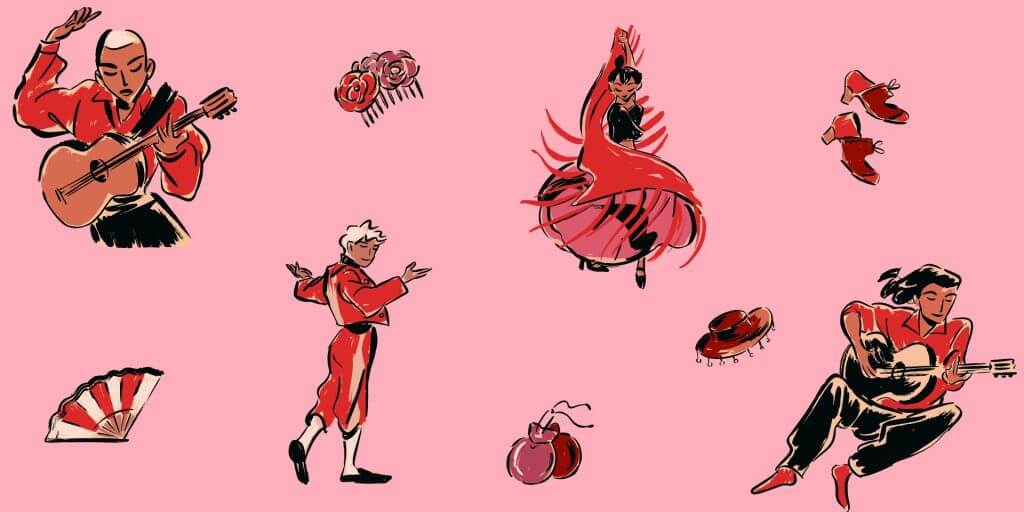
Renowned flamenco dancers
Dancers such as Sara Baras, Joaquín Cortés, Antonio Gades, Matilde Coral and Manuela Carrasco have shaped flamenco dance with virtuosity and passion, preserving tradition while expanding artistic expression.
Recurring themes: Love, Pain and Freedom
Flamenco expresses deep human emotions, exploring passionate love, profound sorrow and the longing for freedom.
Flamenco festivals: where magic happens live
Major flamenco festivals include:
-
Bienal de Flamenco de Sevilla
-
Festival de Jerez
-
Feria de Abril (Seville)
-
Festival Flamenco de Mont-de-Marsan (France)
-
Festival del Cante de las Minas (La Unión)
-
Suma Flamenca (Madrid)
-
Festival Flamenco de Nîmes (France)
Key instruments: guitar and beyond
While the flamenco guitar is central, instruments like the cajón and handclaps also shape its characteristic sound.
Curiosities
Bulería is often a skill test for artists.
Taconeo (footwork) is essential in dance, adding a percussive element.
Flamenco is a living testament to Spain’s cultural richness, a journey that captures heart and soul.