 Carmen Hernández
 10/06/2026
 9 min
9 min 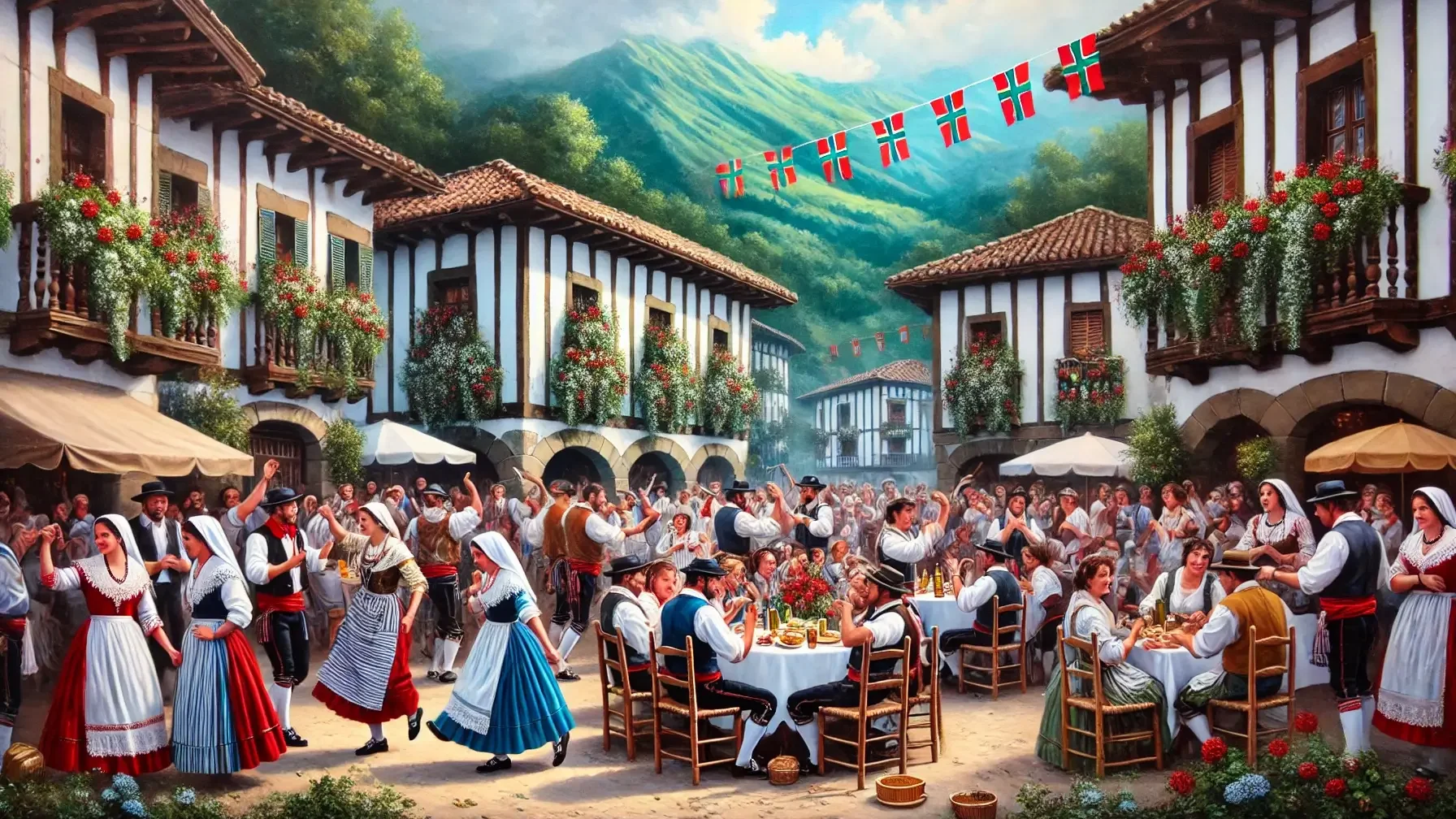
The Basque people are one of the most enigmatic in Europe. With a unique language, a rich culture, and an origin that remains a mystery to historians, the Basques have sparked the curiosity of many. But where do they really come from? Here we explain it to you.
We are going to explore the theories about their origin, their customs, and their role in today’s society. Their history, marked by resistance and the preservation of their identity, has been the subject of study for centuries, giving rise to various hypotheses and fascinating discoveries.
Origin and Theories
Unlike other peoples in Europe, the Basques do not seem to have a clear origin. Their language, Euskera (Basque), has no relation to any other known language, reinforcing the idea that this is a community with very ancient roots. Some theories suggest that the Basques are direct descendants of the first inhabitants of Europe, even from populations that lived in the region before the arrival of Indo-European peoples.
Genetic studies have shown that the Basques have a distinct genetic composition, supporting the hypothesis that they are an indigenous group that has remained relatively isolated for millennia. Human remains dating back more than 10,000 years have been found in caves across the Basque Country, suggesting the region has been inhabited since prehistoric times.
Another theory suggests that the Basques could be related to the Iberians, an ancient people who inhabited the Iberian Peninsula before the arrival of the Romans. Although there is no conclusive evidence of a direct link, some historians believe that Euskera and the Iberian languages might have shared a common ancestor.
🔹 Fun Fact: Did you know that Euskera is one of the oldest languages in Europe and that its origin remains a mystery to linguists? Unlike most European languages, it does not come from Latin, Germanic, or Slavic roots.
Basque Culture and Identity
Beyond their origin, the Basque identity has remained strong throughout the centuries. Their language, Euskera, is a symbol of resistance and cultural pride. Despite the influence of other languages like Spanish and French, Euskera has survived thanks to the community’s efforts to preserve it and teach it to new generations.
Today, there are schools and programs dedicated to teaching Euskera, ensuring its continuity. They are called Ikastolas—cooperative educational centers that use Euskera as the primary language of instruction, forming part of the Basque-language education system in the Basque Country. They emerged at the beginning of the 20th century in the Spanish communities of the Basque Country, Navarre, and Castile and León (the enclave of Treviño), as well as in the French Basque Country.
Additionally, their festivities, traditional sports like Basque pelota, gastronomy, and folk dances are elements that have endured over time. Basque cuisine, with dishes like bacalao al pil-pil (cod fish) or the famous pintxos (Basque tapas), is internationally recognized and attracts thousands of visitors each year. San Sebastián, in particular, is known for its high concentration of Michelin-starred restaurants, making it a world-renowned gastronomic destination.
🔹 Fun Fact: In Basque culture, the “gigantes y cabezudos” (giants and big-heads) are very popular characters in traditional festivals. These are huge papier-mâché figures that parade through the streets, dancing and entertaining the crowd.
Another important aspect of Basque culture is its traditional music and dance. The txalaparta, an ancient percussion instrument, and the trikitixa, a diatonic accordion, are fundamental to Basque music. Furthermore, folk dances, such as the aurresku, are an essential part of important celebrations like weddings and festivals.
The Influence of Euskera on Spanish
Although Euskera and Spanish belong to different language families, centuries of contact between the two have left a mark on Spanish. Many words used daily in Spanish originate from Euskera. Here are some examples:
-
Chabola: Cabin or shack. Interestingly, many people mistakenly believe this word comes from Caló (the language of the Romani people), but its true origin lies in the Basque txabola, while also drawing influence from the French geôle (meaning dungeons, cells, or prisons).
-
Angula: A type of young eel measuring between six and eight centimeters long. Its name comes from the word angula, which is a variant of the Latin anguilla.
-
Cococha: Refers to the small, fleshy chin-locks found on the lower head of hake and cod. The term comes from the Basque kokotxa, which carries the same meaning.
-
Zurrón: A leather pouch commonly used by shepherds. Its origin comes from the word zurrun, meaning ‘bag’.
-
Chapela: A wide-brimmed hat characteristic of the Basque Country. Its origin comes from the Basque term txapela, which in turn derives from the French chapel (hat).
-
Guiri: A colloquial (and sometimes mildly negative) slang term for a foreign tourist. It comes from the Basque word guiristino, which originally meant “Cristino”—a nickname used during the Carlist Wars to refer to the followers of the regent Maria Christina of Bourbon-Two Sicilies.
-
Chistorra: A type of sausage similar to chorizo; its etymological origin comes from the Basque txistor, which translates to long sausage.
-
Izquierda: Refers to the left direction or spatial location, as well as a political ideology. Its origin is in the word ezquerra, which has a similar meaning.
-
Alud: An avalanche—a massive amount of snow falling forcefully from mountains. Its origin is pre-Roman and is related to the Basque term lurte, which means ‘landslide’.
-
Mochila: Backpack. A bag carried on the back used for supplies during hiking or traveling. Its origin is found in the Spanish word mochil (boy), which in turn comes from the Basque term motxil, a diminutive of motil (also meaning ‘boy’).
-
Chamarra: A jacket, usually rustic in style, which originates from the word zamarra, sharing the same meaning.
-
Bacalao: Cod fish. A teleost fish of the anacanthine genus with a symmetrical body, characterized by three dorsal fins, two anal fins, and a barbel on the lower jaw. Its name comes from the Basque term bakailao and shares similarities with the Old Dutch bakeljauw and its variant kabeljauw.
-
Chatarra: Scrap metal. Remnants generated as a byproduct during iron ore processing, also used colloquially to refer to old, deteriorated, or useless objects. It comes from the word txatarra, meaning ‘old stuff’.
-
Pacharán: A liqueur made by macerating sloe berries in an anise-flavored spirit, giving it its characteristic sweet-and-sour flavor. Its name, patxaran, comes from Euskera, specifically from the words paitar or pattar (spirit) and aran (sloe berry).
-
Gamarra: A horse strap or martingale, coming from the Basque gamarra with the same meaning.
-
Aquelarre: A coven—a nightly gathering of witches and warlocks where it is believed the devil, usually represented as a male goat, participates in magical or superstitious rituals. The term comes from akelarre, which originally meant ‘meadow of the male goat’.
-
Chistera: A basket narrow at the top and wider at the base, used by fishermen to store caught fish. Colloquially, it also refers to a top hat worn on formal occasions. The word comes from txistera, which originates from the Latin cistella, meaning ‘small basket’.
-
Ganzúa: Lockpick. A strong wire curved into a hook at one end, used to open or move lock latches when the key is missing. It comes from the Basque gantzua, though its exact historical translation is unknown.
-
Mus: A card game consisting of four separate betting rounds where players can discard cards if everyone agrees. Its origin comes from the Basque term mus, which in turn comes from the French mouche, meaning ‘fly’.
Furthermore, colloquial speech and Spanish place names carry heavy Basque influences, especially in regions close to the Basque Country, such as Navarre and La Rioja.
🔹 Fun Fact: Although Euskera is a non-Indo-European language, its influence on Spanish is remarkable, particularly regarding terms related to nature, tools, and popular idioms.
The Basque Country Today
Today, the Basque Country is an autonomous community in Spain with a high degree of self-government. Its main cities—Bilbao, San Sebastián, and Vitoria—blend modernity with deep-rooted traditions.
-
Bilbao, for example, has undergone an impressive transformation in recent decades, shifting from an industrial city to a cultural and tourism hub, largely thanks to the construction of the iconic Guggenheim Museum.
-
San Sebastián, on the other hand, is famous for its beaches, its international film festival, and its exquisite gastronomy.
-
Vitoria, the capital of the community, stands out for its quality of life, its focus on sustainability, and its stunning historic old town.
In addition to its cultural wealth, the region is known for its breathtaking nature, featuring mountains, valleys, and a spectacular coastline that make it an ideal destination for travelers and Spanish language enthusiasts alike. Hiking in the Pyrenees, surfing on the beaches of Mundaka, and exploring picturesque villages like Hondarribia are just a few of the experiences this region offers.
🔹 Fun Fact: The Mundaka wave, located on the Basque coast, is considered one of the best left-hand waves in the world for surfing, attracting surfers from all corners of the planet.
In Short
The Basque people remain a fascinating enigma, with a cultural identity that has withstood the test of time. Their language, their history, and their way of life reflect a community deeply connected to its past with a strong connection with its past and a clear vision toward the future.
Whether for its history, its language, or its gastronomy, the Basque Country is a place that deserves to be discovered. If you are learning Spanish and want to immerse yourself in a unique culture, visiting the Basque Country can be an unforgettable experience. Its hospitality, cultural heritage, and natural beauty make it an essential destination for any traveler interested in the diversity of Spain.