 Carmen Hernández
 28/08/2026
 8 min
8 min 
What do “tío”, “guiri” or “molar” mean? Dictionary of Spanish Youth Slang
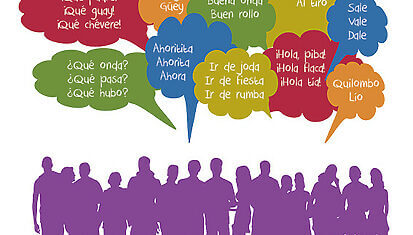
Learning Spanish goes far beyond memorizing grammar rules and vocabulary lists. If you visit Spain or decide to study here, you will soon discover that Spaniards use many informal words and expressions that don’t usually appear in textbooks. You might hear phrases like “¡Qué guay!”, “Ese tío es muy majo” or “Este plan mola mucho” and wonder what they actually mean.
Spanish youth slang is part of everyday language, and knowing it will help you better understand conversations, TV shows, movies, and even social media. Additionally, using some of these expressions in the right context will make your Spanish sound much more natural.
In this article, you will find a mini-dictionary with some of the most common words and expressions used by young people in Spain.
What is youth slang?
Youth slang is a set of words and expressions used mainly by young people in informal situations. Many of them change over time, while others have been part of colloquial Spanish for decades.
It is important to remember that this vocabulary is not typically used in formal contexts, such as job interviews, professional meetings, or official exams. However, it constantly pops up in conversations among friends and in everyday speech.
“Tío” and “tía”: much more than a relative
This is probably one of the very first words you will hear when you arrive in Spain.
Although literally tío means uncle (and tía means aunt), in colloquial language it is used to refer to any person (like “guy”, “dude”, “chick”, or “girl”).
For example:
-
“Ese tío vive en mi edificio.” (That guy lives in my building.)
-
“¿Has visto a esa tía?” (Have you seen that girl/chick?)
It can also be used to get a friend’s attention.
Examples:
-
“¡Tío, tienes que ver esta película!” (Dude, you have to see this movie!)
-
“¿Pero qué haces, tía?” (What on earth are you doing, girl?)
It has no relation to family and is constantly used among young people.
“Guiri”: the foreign tourist
One of the words that sparks the most curiosity among those learning Spanish is guiri.
This term generally refers to a foreign tourist, especially from northern Europe or English-speaking countries, who is visiting Spain. Depending on the context, it can be a neutral, affectionate, or even slightly teasing word, but it is normally not considered an insult.
For example:
-
“En verano la playa está llena de guiris.” (In the summer, the beach is full of tourists/foreigners.)
-
“Ese restaurante siempre está lleno de guiris.” (That restaurant is always full of foreigners.)
Many international students end up calling themselves “guiris” with a sense of humor.
“Molar”: to like a lot / to be cool
If you want to sound more natural in Spain, learning the verb molar is almost mandatory.
Molar means that something is really liked or seems very cool and interesting.
For example:
-
“Esa canción mola muchísimo.” (That song is so cool / I love that song.)
-
“Tu idea mola.” (Your idea is cool/great.)
-
“Este restaurante mola un montón.” (This restaurant is awesome.)
It is one of the most widely used words in colloquial Spanish and can replace expressions like gustar (to like), although with a more informal and enthusiastic tone.
“Guay”: something cool/great
Another essential word is guay.
When something is fun, nice, interesting, or excellent, many Spaniards simply say it is “guay“.
Examples:
-
“La excursión estuvo muy guay.” (The field trip was really cool.)
-
“Tu profesor es muy guay.” (Your teacher is very cool.)
-
“¡Qué guay!” (How cool! / Great!)
It is a simple expression that you will hear everywhere.
“Vale”: much more than “okay”
Although it is not exclusive to youth slang, vale is an indispensable word in Spain.
It is used to say:
-
Okay / All right.
-
Sure.
-
Understood.
-
Perfect.
Examples:
-
“Nos vemos a las seis.” (See you at six.)
-
“Vale.” (Okay.)
Students are often surprised by how frequently Spaniards use this word during a conversation.
“Flipar”: to be blown away / to freak out
When something is incredible, shocking, or unexpected, many Spaniards use the verb flipar.
For example:
-
“Vas a flipar cuando lo veas.” (You’re going to flip out / be blown away when you see it.)
-
“Flipé con ese concierto.” (I was blown away by that concert.)
-
“Estoy flipando.” (I’m freaking out / I can’t believe it.)
It can express both positive and negative surprise.
“Currar”: to work
Instead of saying trabajar (to work), many people use the verb currar in informal situations.
Examples:
-
“Hoy me toca currar.” (I have to work today.)
-
“¿Dónde curras?” (Where do you work?)
-
“Estoy currando todo el verano.” (I’m working all summer.)
It is a very common word among both young people and adults.
“Pasta”: money
If someone says they don’t have pasta, they are not talking about Italian food.
In Spain, pasta means money (cash/dough).
Examples:
-
“No tengo pasta para viajar este mes.” (I don’t have the cash to travel this month.)
-
“Ahorrar pasta es difícil.” (Saving money is hard.)
There are also other similar words, like pelas (referring to the old peseta currency), although it is heard less frequently today.
“Majo” o “maja”: a nice/pleasant person
When a Spaniard says someone is muy majo, they are paying them a compliment.
It means that the person is friendly, kind, or pleasant.
Examples:
-
“Tu profesora es muy maja.” (Your teacher is really nice/friendly.)
-
“Los vecinos fueron muy majos con nosotros.” (The neighbors were very friendly/nice to us.)
It is a word especially common in central and northern Spain.
“Rayarse”: to overthink / to worry too much
The verb rayarse (sometimes spelled rallarse) means to obsess, get stressed, or overthink a problem.
Examples:
-
“No te rayes.” (Don’t overthink it / Don’t stress out.)
-
“Me estoy rayando por el examen.” (I’m stressing out over the exam.)
It is a highly common expression among young people and is usually used to advise someone not to worry so much.
“Finde”: the weekend
Instead of saying fin de semana, many people simply shorten it to finde.
Por ejemplo:
-
“¿Qué haces este finde?” (What are you doing this weekend?)
-
“Nos vemos el finde que viene.” (See you next weekend.)
It is a very popular abbreviation used both in spoken conversations and in WhatsApp messages.
“Estar de tranqui”
If someone proposes a relaxed, low-key plan, they might say:
-
“Hoy estoy de tranqui.” (Today I’m just chilling / keeping it low-key.)
This expression means that the person wants to rest, relax, or do something quiet and uncomplicated.
“Dar palo”
When doing something feels like too much effort or you just don’t feel like doing it, many Spaniards say it da palo.
Examples:
-
“Me da palo salir con este calor.” (I can’t be bothered to go out in this heat.)
-
“Me da palo estudiar hoy.” (Studying today feels like such a drag.)
It is equivalent to saying that something makes you feel incredibly lazy (pereza).
“Petarlo”
When something is extremely successful, people say lo está petando.
Examples:
-
“Ese cantante lo está petando.” (That singer is absolutely smashing it/killing it.)
-
“La nueva serie lo está petando en Netflix.” (The new series is a massive hit on Netflix.)
It is a very common expression on social media and among youth.
Is it recommended to use these words?
Yes, but in moderation.
Spanish students often want to quickly incorporate these expressions into their vocabulary, and that is a positive thing. However, it is important to use them only in informal contexts and after you have heard how native speakers employ them.
In a conversation with friends or classmates they can sound completely natural, whereas in a job interview or a professional meeting, it is best to opt for a more formal register.
Additionally, you should keep in mind that some expressions change depending on the region. Spain has an enormous linguistic wealth, and you might hear different words in Madrid, Seville, Valencia, Bilbao, or Barcelona.
Learn Spanish the way Spaniards actually speak it
Mastering grammar is fundamental, but understanding colloquial language is what will truly make you feel integrated when living in or traveling through Spain.
Listening to real conversations, watching Spanish TV shows, talking to native speakers, and studying at a Spanish language school are some of the best ways to get familiar with this type of vocabulary.
The next time someone tells you “Tío, ese plan mola un montón. ¿Te vienes?” (Dude, that plan is so cool. Are you coming?), you will know exactly what they mean… and you might even reply with a perfectly natural “¡Vale, qué guay!“ (Okay, cool!).